
As an Amazon Associate, I earn commission from qualifying purchases.
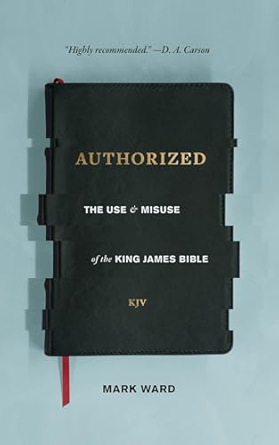
In Christian circles, one of the most contentious topics is undoubtedly that of Bible translations. Everyone has their view on which one is best and which ones are bad. In his book Authorized: The Use and Misuse of the King James Bible, Mark Ward steps into the fray with a balanced and insightful approach. He weighs the gains and losses of moving away from the King James Version (KJV) in order to determine whether we should move away from it.
About the Author
Mark Ward is an author and blogger. He has written and talked extensively on the topic of Bible translations. He grew up reading the KJV and still prefers it; however, as he details in his book, he has come to understand that it is time to start making the move away from using the KJV in most situations.
Summary
Mark Ward starts off his book by outlining the things that we as a Christian culture will lose by moving away from the KJV. He points out that many phrases that are popular in culture, like the Golden Rule, for example, come from the KJV. He also grieves that there is not a clear choice as to which version will replace the KJV as the standard bearer that the KJV has been for the last 400 years.
Next, he begins making his case for why the KJV should not be used for every situation. He works through some dead words and false friends (words that have changed in meaning over the last 400 years, but are still used today). The word “halt,” for example, that is used in 1 Kings 18:21. Today it means “to stop,” but when the KJV was written, it meant “to limp.” His biggest argument is based on the Bible needing to be in the vernacular (the way language is used today). He used what the KJV translators said in the preface to exemplify his point.
Lastly, he works through some common objections and talks about which translation is best (the answer is all the good ones). He specifically mentions the New International Version (NIV), English Standard Version (ESV), Christian Standard Bible (CSB), New American Standard Bible (NASB), New Living Translation (NLT), plus one or two others.
Analysis
Mark Ward strikes a good balance between acknowledging the benefits and downsides of both the KJV and modern translations. He makes his case without getting into the weeds of textual criticism, which he described as being outside the scope of his book. His goal was to help calm the strife that so often comes from discussions on Bible translations. It had that effect on me, at least, so I believe he is successful in what he set out to do.
Two points stood out to me as particularly helpful. First, he talked about how blessed we are to have so many faithful translations. He points out that the goal of the translators today is much the same as the translators of the KJV in 1611: to help everyone be able to read and understand God’s Word. It can be a huge help in studying to see how the different translators chose to translate a certain passage.
Second, he talks about how the KJV translators expressed their intentions in the preface to the KJV 1611. The purpose that the translators had was to put the Bible into modern (for them) vernacular. They also viewed it as future translators’ duty to do the same for their time periods.1
He states in his book that the intended audience is people who prefer the KJV. I believe he addresses his audience very well. I’m not personally part of that audience, but I appreciate his balanced approach, which has helped reduce a wariness of other translations in my mind. In a conversation often marked by division, Authorized offers a balanced and thoughtful perspective. Whether you prefer the KJV or someone curious about translation debates, this book brings clarity without contention.


Leave a Reply